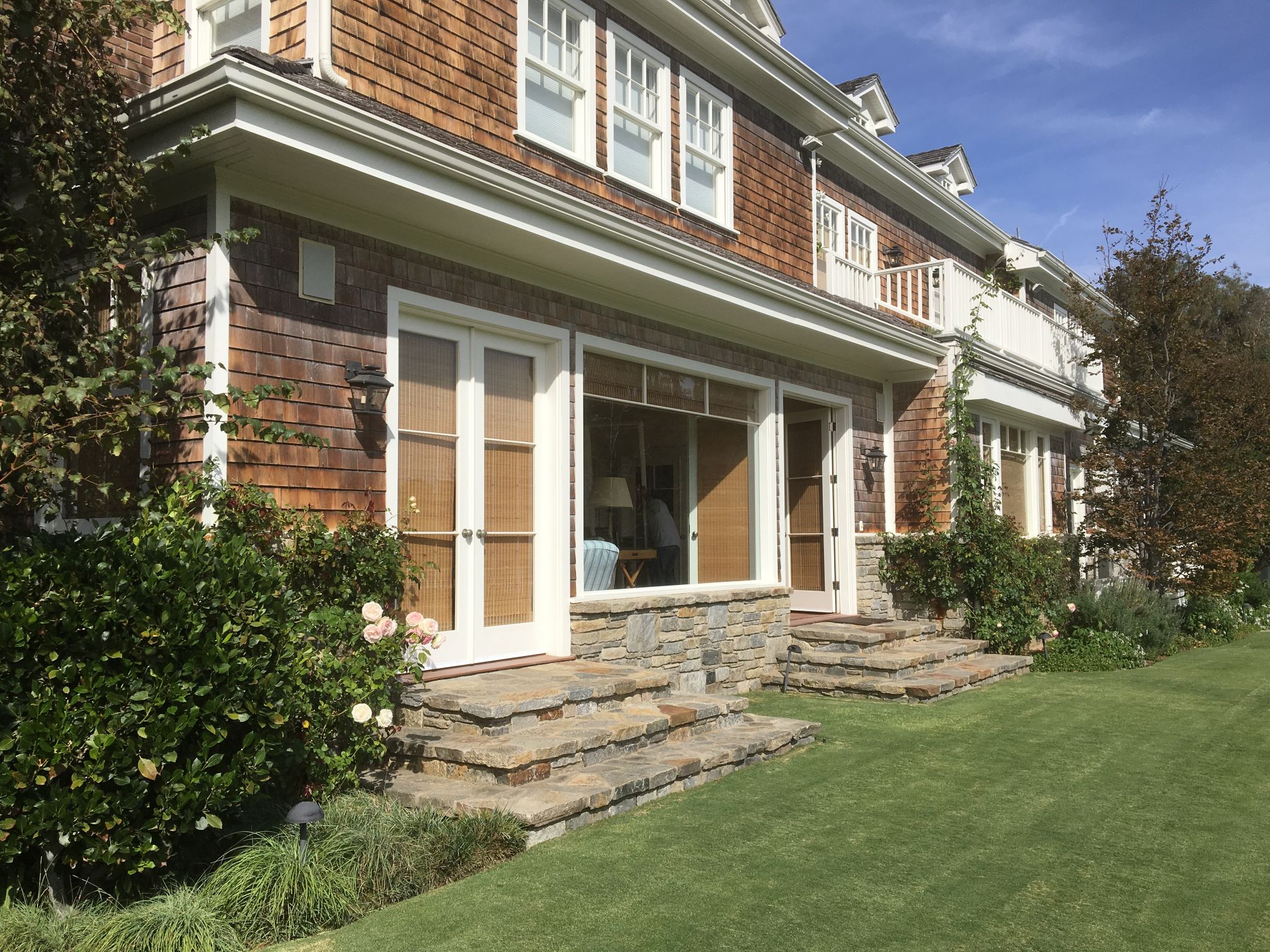
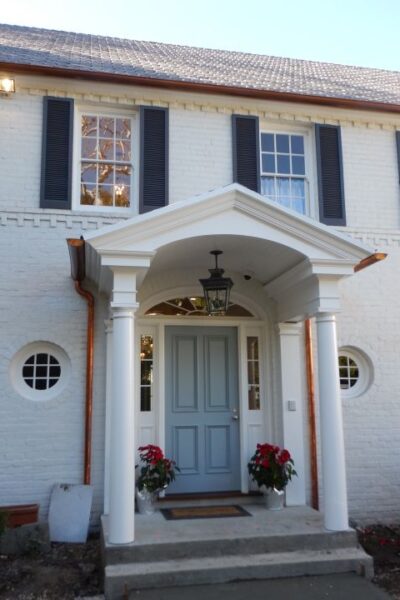
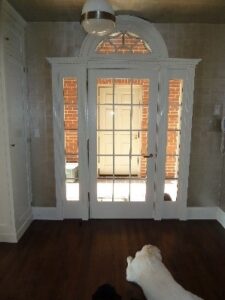
A typical “Door” shell is put together using 4 wood components, Stiles, the two vertical parts that travel the height of the door on either side and Rails, “Top” rail and “Bottom” rail, go between the stiles at the top and bottom respectively. These components are profiled on one edge (inside) and glass or wooden panels are held by these profiled edges. These are commonly referred to as “sticking” detail. In most cases similarly profiled pieces are then installed on the non-profiled side (outside) to hold the glass or wooden panels. These pieces are called “stops”.
Commonly used profiles (sticking details)are
- Ogee – an ‘S’ shaped profile
- Ovalo – a quarter arch profile
- Square – Flat or stepped
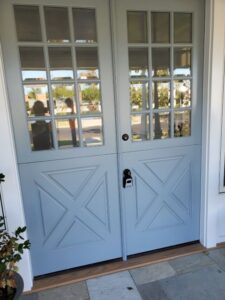
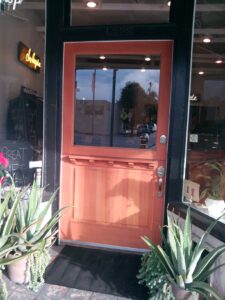
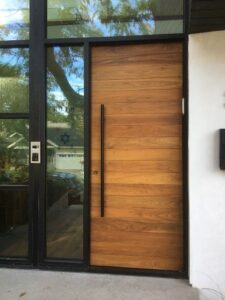
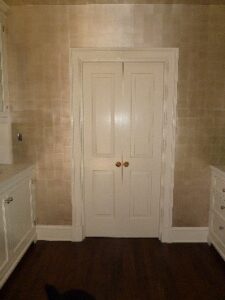
Wood Species We Work With
Mahogany — A premium hardwood prized for its rich reddish-brown color, tight grain, and exceptional dimensional stability. Mahogany resists warping and swelling, making it ideal for exterior doors in Southern California’s climate. Its natural beauty takes stain evenly and develops a deep patina over time.
Oak — A dense, durable hardwood with a prominent open grain pattern. White oak is particularly well-suited for exterior doors due to its natural moisture resistance. Oak doors offer a classic, traditional appearance and excellent longevity.
Douglas Fir — A versatile softwood with a straight, tight grain and warm reddish hue. Fir is a cost-effective option that accepts paint and stain well. It is dimensionally stable and widely used in both historic restoration and new construction.
Clear Pine — A traditional choice for painted doors. Pine is lightweight, easy to machine, and accepts paint beautifully. We use select grades free of knots and defects for a clean, smooth finish.
We also work with other species including alder, cherry, and walnut. Custom wood species are available upon request. The same wood options are available for our custom wood windows and wood moulding.
Customization & Construction
Every door we manufacture is built to your exact specifications. Our doors are constructed using traditional stile and rail joinery — the same method used for centuries in fine woodworking. Stiles (vertical components) and rails (horizontal components) are joined using Cope and Stick with Dowels, glued for structural integrity that lasts generations.
We offer the following customization options across all our French doors, Colonial doors, Dutch doors, Flush doors, and Panel doors:
- Custom sizes — Any width, height, and thickness to fit non-standard openings
- Arched tops — Radius, Gothic, and custom arch profiles
- Glass options — Single glazed, insulated (double-pane), tempered, frosted, or decorative
- Divided lite patterns — True Divided Lite (TDL) or Simulated Divided Lite (SDL) in any configuration
- Sticking profiles — Ogee, Ovalo, or Square to match existing architecture
- Pre-hanging — Doors are machined, mortised for hinges, bored for locks, and tested in their frames before shipment
Title 24 Compliance & Energy Efficiency
California’s Title 24 energy standards require exterior doors with glass to meet specific U-factor and Solar Heat Gain Coefficient (SHGC) requirements. Our doors are built to meet or exceed these standards. We use insulated glass units (IGUs) with Low-E coatings and argon gas fills where required, and we provide the necessary documentation for building department submittals.
All our pre-hung door units are assembled, tested, and adjusted in our shop before shipment to ensure proper operation and weather sealing.
Lead Times & Ordering
Typical lead time for custom doors is 6–10 weeks depending on wood species availability, complexity, and current shop load. We recommend contacting us early in your project timeline.
To get started, provide us with the rough opening dimensions, desired wood species, style, and any special requirements. We’ll provide a detailed quote and production schedule. Visit our contact page to request a quote.